Althory: A Handwritten Font for Creative Web Design
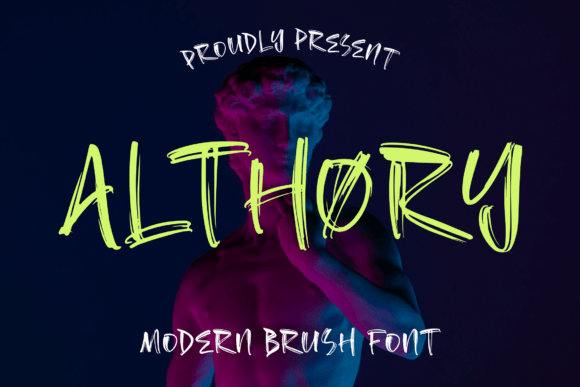
As a web designer, I’m always on the lookout for fonts that bring personality to digital spaces without sacrificing clarity. Althory, a handwritten brush script font from Script Amp, has quickly become a go-to for adding warmth and character to my projects. Its marker board aesthetic feels authentic, like it was written by hand—perfect for creative websites, brand identities, and digital campaigns.
Althory in Action: A Website Header Test
I recently tested Althory on a boutique online store’s homepage. The hero section needed a bold, eye-catching headline that felt personal yet professional. Althory’s fluid strokes and subtle imperfections gave the text a handmade quality that stood out against the clean, modern layout. It worked especially well when paired with a simple sans serif for the subtext, creating a balanced contrast that drew the eye without overwhelming the reader.
On mobile devices, Althory maintained its legibility even at smaller sizes. The font’s natural variation helped it feel more approachable, which is key for an audience looking for unique, artisanal products. I found it particularly effective for call-to-action buttons, where its expressive style added a touch of creativity without being too distracting.
Althory for Digital Branding and Landing Pages
When working on a coaching website, I used Althory for the main heading and several section titles. Its organic flow complemented the site’s minimalist design while still feeling dynamic. The font’s soft curves and uneven baseline made it feel less rigid than most display fonts, which was perfect for a brand focused on mindfulness and self-expression.
For a product landing page, Althory shone as a decorative element. I used it for the headline and a few supporting phrases, ensuring it didn’t compete with the main body text. The font’s versatility allowed me to experiment with different placements, from centered headers to sidebars, without losing its visual impact.
Readability and Responsive Design Considerations
One of the first things I checked was how Althory performed on dark backgrounds. The font’s stroke weight and spacing held up well, making it suitable for dark mode designs. On light backgrounds, it retained enough contrast to remain readable without appearing harsh.
For responsive layouts, I noticed that Althory scaled smoothly across different screen sizes. However, I recommend using it for short phrases rather than long paragraphs. Its decorative nature can make dense blocks of text hard to scan, which isn’t ideal for body copy or detailed instructions.
When using Althory on image overlays, I found that it worked best when placed over solid colors or subtle textures. It didn’t blend well with busy backgrounds, where the font’s details could get lost. For such cases, a simpler typeface would be more effective.
Font Pairing and Web Use Cases
Althory pairs beautifully with clean, neutral fonts. I often use it alongside a sans serif like Open Sans or Montserrat for body text. This combination keeps the design cohesive while letting Althory shine in headlines and accents. For editorial-style sites, pairing it with a serif font like Playfair Display adds a refined touch that feels both modern and timeless.
It’s also a great choice for logo design, especially for brands with a creative or artisanal vibe. The font’s irregularities give it a human touch, which can help build trust and connection with the audience. I’ve used it in several client projects where the goal was to convey authenticity and craftsmanship.
For digital ads and social media graphics, Althory adds a personal, handcrafted feel. It works well in banners, post headers, and promotional content, helping to differentiate a brand from competitors. Just be mindful of how it looks in small formats—like thumbnails or profile pictures—where the details might not come through as clearly.
What to Consider Before Using Althory
Before integrating Althory into a project, I always check the available styles, weights, and alternates. The font includes multiple variations that allow for more flexibility in design. It also supports multilingual characters, which is essential for international audiences.
For web use, I recommend checking if the font is available as a webfont. If not, you may need to convert it or use a similar alternative. Always verify the licensing terms to ensure it’s suitable for commercial projects, especially if you’re designing for clients or selling digital assets.
Overall, Althory is a versatile and expressive font that brings a sense of warmth and creativity to digital design. Whether you’re building a portfolio site, launching an online store, or creating a brand identity, this font offers a fresh, handmade look that stands out in a crowded digital space.